
2026-04-07
"Have you eaten dinner yet?" "No need to ask, Ah Gui!" "This old friend is so stingy"—these slang terms flowing in the daily conversations of Cantonese people seem simple and straightforward, but they actually contain cultural codes that have transcended a thousand years. When young people wonder why "one dollar chicken" is one yuan, or why "bursting belly" refers to both laughing until your stomach hurts and impromptu creation, Mr. Nie Juping's "A Study of Cantonese Slang," compiled over more than ten years, is like a key that unlocks the treasure trove of ancient Chinese and the long scroll of folk customs behind Cantonese. "
Have you eaten dinner yet?"
"Let's go out for tea when we have some free time!"
"There is a queue but it's not your turn yet."
These everyday Cantonese phrases are actually inherited from classical Chinese. Phrases like "
湿湿碎" (shī shī suì), "锡哂你" (xī shān nǐ), "食塞米" (shí sāi mǐ), "鸡碎时多" (jī suì shí duō), "卜卜斋" (bǔ bǔ zhāi), and "唱散纸" (chàng sàn zhǐ) are all corrupted and distorted Cantonese expressions. Phrases
like "头赤" (tóu chì), "竦鸡" (sōng jī), "好寸" (hǎo cùn), "好于" (hǎo yú), "他条" (tā tiáo), "叹世界" (tàn shì jiè), "逗利是" (dòu lì shì), "男人老狗" (nán nán lǎo gǒu), and "黄绿医生" (huáng lǜ yī shēng) are all misspelled.
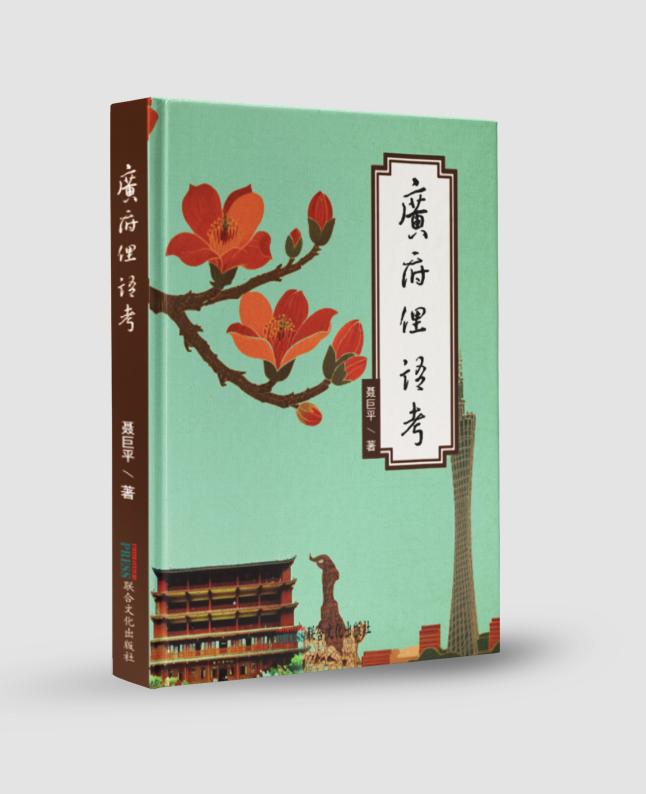
Cantonese, as the extant Chinese dialect that best preserves the characteristics of Middle Chinese, is hailed as a "living fossil of ancient Chinese." However, for a long time, the transmission of Cantonese has relied heavily on oral tradition rather than written records. Many slang terms are "sounded but not written," and the overuse of homophones has led to a disconnect between sound and meaning. Even newspapers and media often feature miswritten characters. The publication of "A Study of Cantonese Slang" aims to rectify this and clarify these slang terms that carry the genes of Cantonese culture, ensuring that their pronunciation, characters, and meanings are understood.
The most astonishing aspect of the book is its in-depth exploration of the roots of slang in classical Chinese. The everyday phrase "而家" (now) originates from "而今" in the Analects; the final word "卒之" (finally) is found in Wang Anshi's "The Tragedy of Zhongyong," where it is recorded as "finally becoming one of the masses"; even the character "漮" (dry) is explained in the Shuowen Jiezi as "empty of water," and the Cantonese expression "漮过镬耳" (poor and desolate) uses this ancient meaning. These seemingly "rustic" colloquialisms are actually cultural relics spanning millennia, meticulously examined and traced in the book, leading readers to a sudden realization: the Cantonese we speak every day is actually the refined language of the ancients.
Beyond tracing the origins of classical Chinese, the book's interpretations of Cantonese allusions add to the enjoyment. "Jidi Congee" is not only a classic Cantonese dim sum dish, but also tells the inspiring story of Lun Wenxu's pursuit of knowledge through congee; the combination of pig liver, pig intestines, and pork balls subtly reflects the "three successes" in the imperial examination culture. The proverb "Shawan lanterns—what a waste" originates from the lanterns of the wealthy He family in Shawan, Panyu, which were ubiquitous in the streets and alleys; the homophone "He Mansion" and "what a waste" has been passed down to this day. And "a big snake defecating" is a metaphor for being surprised by the unusual, surprisingly related to a misinterpretation of the Hakka word for "big city," showcasing the ingenuity of folk wisdom.
From folk customs to historical events, slang has always been a witness to the times. The origin of "大耳笼" (da'erlong) is related to the identification customs of loan sharks in the early days of Hong Kong's opening to trade; the story of "放飞机" (fangfeiji) comes from the amusing incident of Hong Kong's first seaplane performance being canceled three times; "朱义盛" (Zhu Yisheng) became a synonym for counterfeit goods, behind which lies the legendary gilding craftsmanship of a Foshan jewelry shop in the late Qing Dynasty. Mr. Nie Juping has consulted classics such as "A Study of Guangdong Slang" and "The Original Characters of Guangzhou Language," and compared them with "Shuowen Jiezi" and "Kangxi Dictionary," to tell the origin, evolution, and usage of each slang, allowing readers to understand the commercial culture, folk beliefs, and historical changes of Guangzhou through interesting anecdotes.
What's even more remarkable is the book's practical value in its research on the correct characters for Cantonese. The original character for "谷气" (gǔqì) is the ancient Chinese "丂气," which the *Shuowen Jiezi* defines as "breath about to exhale." "睇" (di) not only means "to look," but also has the elegant connotation of "既含睇兮又宜笑" (jì hán di xī yòu xiào) in the *Chu Ci* (Songs of Chu). Even the children's game "捉伊因" (zhuō yī yīn) uses the character "伊人" (yī rén) from the *Classic of Poetry* (Shijing): "所谓伊人,在水一方" (suǒ wèi yī rén, zài shuǐ yī fāng). These researches not only correct long-standing errors in character usage but also provide a standardized basis for the written expression of Cantonese.
At a time when the preservation of Cantonese faces challenges, the value of *A Study of Cantonese Slang* is becoming increasingly apparent. The younger generation is becoming increasingly unfamiliar with traditional terms like "aunt" and "grandmother," and the cultural connotations of slang such as "tough-necked" and "fierce" are fading. However, the book's collection of hundreds of slang terms, proverbs, and loanwords, covering classical Chinese, folk tales, and Cantonese pronunciation, provides not only detailed research materials for language researchers but also a bridge for general readers to understand local culture. Whether you want to understand the proverbs spoken by your elders or hope to pass on your local dialect and cultural heritage to your children, this book is an indispensable cultural treasure.
Flipping through this book is like conversing with a thousand years of history: reading the anecdote of Emperor Qianlong "knocking on the table to thank for tea" helps one understand the origin of Cantonese tea-drinking etiquette; knowing that "迮崇钱" is actually the ancient form of "压岁钱" (lucky money) clarifies the auspicious meaning of red envelopes during the Spring Festival; understanding that "济军" originated from the warlord troops in the early Republic of China allows one to better appreciate the memories of people's lives hidden in the slang. Each slang term is a microcosm of history, and each character is a piece of cultural puzzle, connecting the thousand-year journey of the Cantonese people from the Central Plains to the south and their roots in Lingnan.
Language is the root of culture, and slang is the fabric of life. *A Study of Cantonese Slang* is not only a reference book but also a cultural bridge connecting the past and present. It helps us understand that the charm of Cantonese lies not only in its melodious tones but also in its profound historical accumulation and vibrant folk wisdom. When the ancient admonition "Don't talk while eating or sleeping" transforms into the daily reminder "Don't chat while eating," and when the elegant phrase "A friend has come from afar" becomes the warm greeting "Old friend, it's been a long time!", Cantonese culture is passed down through generations in these slang expressions.
For the people of Guangzhou, this book is a repository of nostalgia; for language enthusiasts, it is a key to unlocking the secrets of classical Chinese; for cultural inheritors, it is a precious document for safeguarding cultural heritage. In the fast-paced modern life, why not open "A Study of Guangzhou Slang" and, amidst the aroma of tea and the slang used in the streets and alleys, feel the thousand-year-old elegance hidden in the everyday life, ensuring that this ancient language, originating from the Central Plains and rooted in Lingnan, continues to thrive and flourish.
If you're curious about the historical origins of "salty pig's trotters," want to understand the true meaning of "searching ancient wells," or hope to preserve the cultural memories behind local dialects for future generations, "A Study of Cantonese Slang" is definitely worth reading carefully. It will help you discover that those casually uttered slang terms are cultural treasures worth cherishing.
About the Author
Nie Juping, male, born in 1935, is from Enping City, Jiangmen , Guangdong Province . He holds a college diploma and is a senior high school teacher. He has been recognized as an outstanding educator and awarded the title of "Meritorious Teacher." He is a member of the Communist Party of China, a poet and calligrapher, and a scholar of Cantonese culture. He has 16,000 followers, 100,000 likes, 4,954 followers, and 1,739 friends on Toutiao. Toutiao has also recognized him with comments such as " Emerging Talent , " " Swift Writing, " "Brilliant Writing , " "Flowing Literature," " Surrounding Scenery , " "Illustrated Text," and " Illustrated Text." He has received numerous honors, including "Brilliant Shadow ," and has been awarded 21 Toutiao badges. He has published 1,545 articles in the People's Daily, has 22,000 followers, and has an influence rating of 4,954.
"Has dinner been served yet?"
"Let's go out for tea when we have some free time!"
"There is a queue but it's not your turn yet."
These everyday phrases spoken by Cantonese people are actually a legacy of classical Chinese.
The phrases "湿湿碎", "锡哂你", "食塞米", "鸡碎时多", "卜卜斋", and "唱散纸" are all mispronounced and distorted Cantonese expressions.
06-12
06-11
06-11
06-11
06-11
06-11
06-11
06-11
06-10
06-10
